
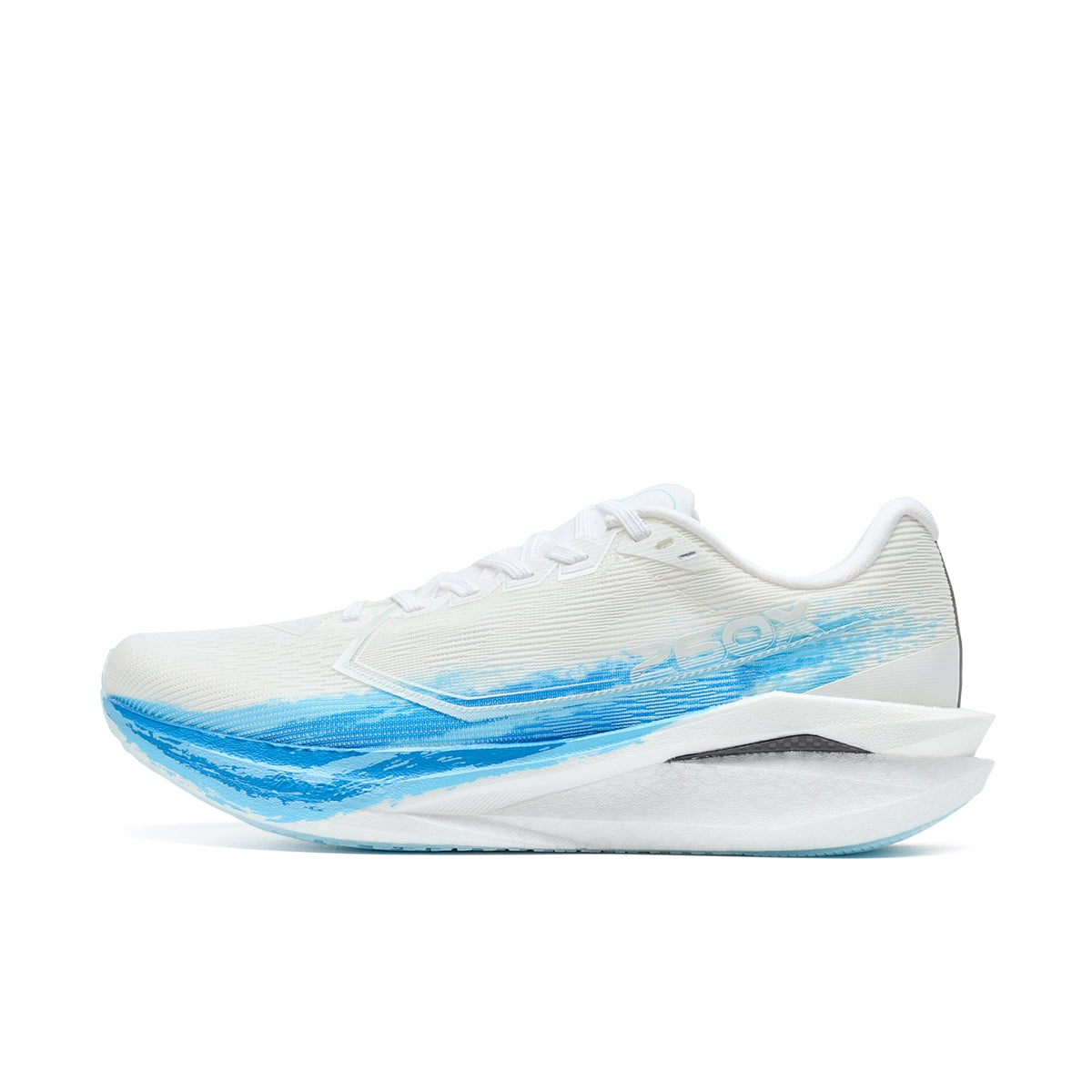
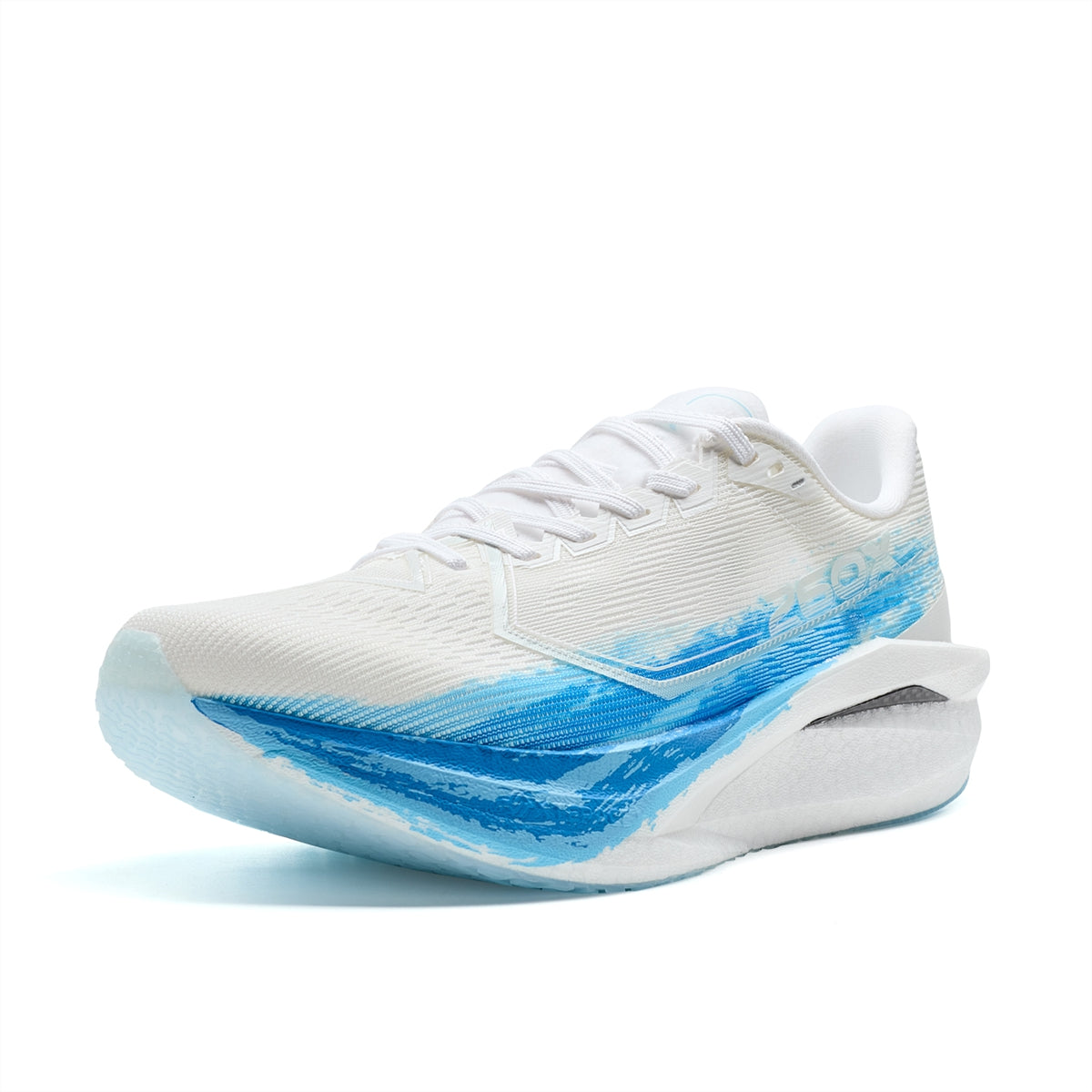
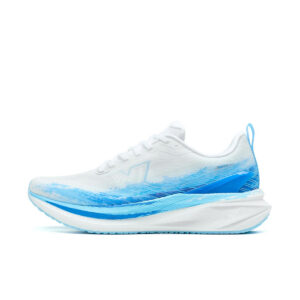
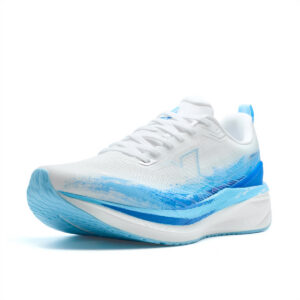
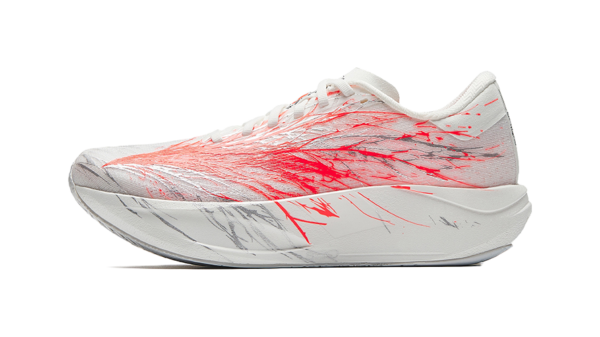
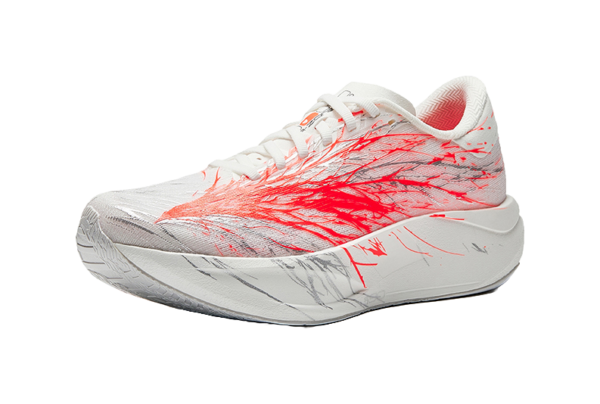
Xtep 260X 3.0 “Pale Blue” — Men’s Carbon Plate Tempo Shoes 974119110003
$209.99
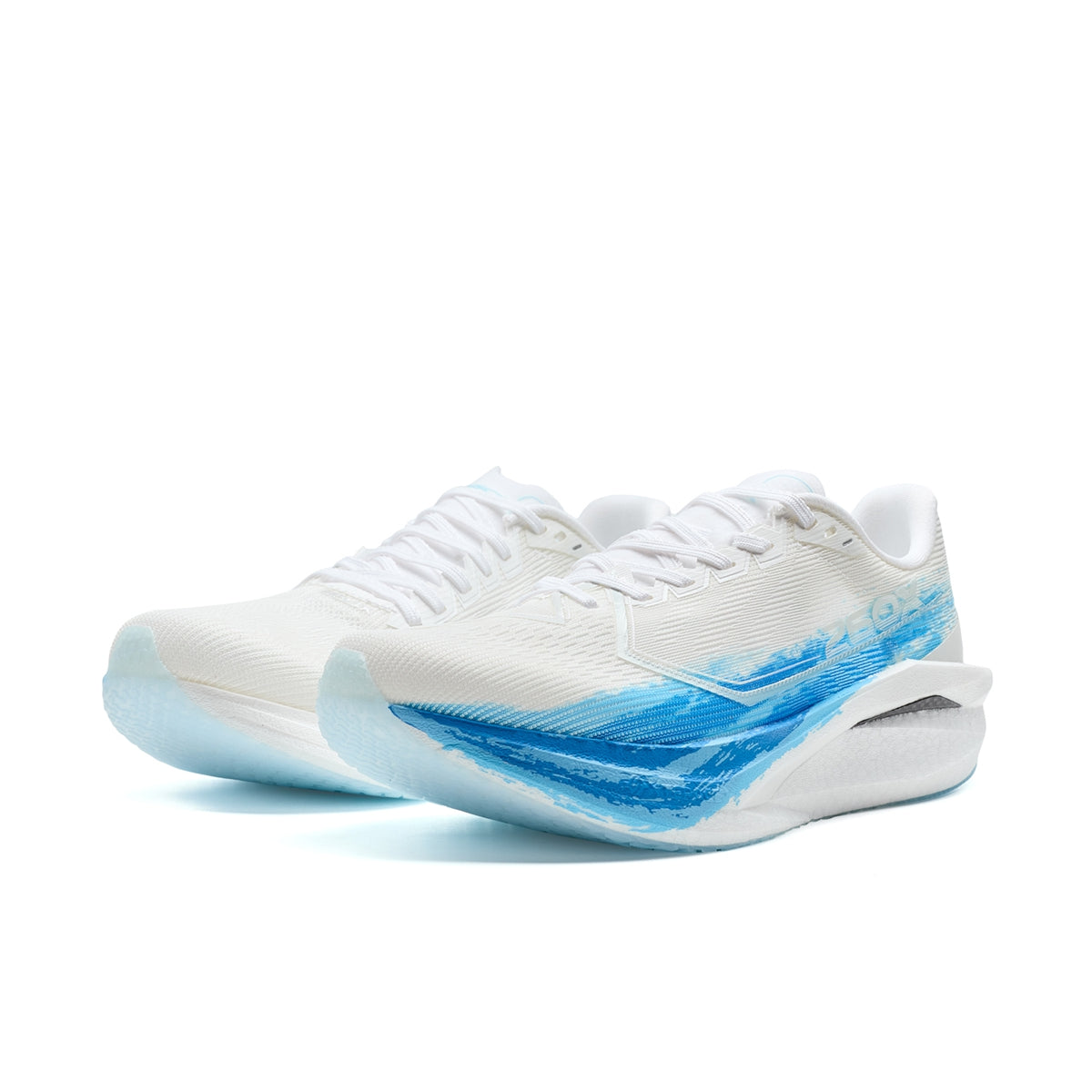
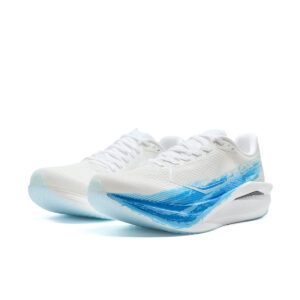
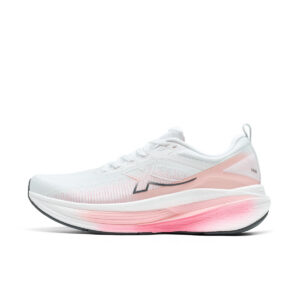
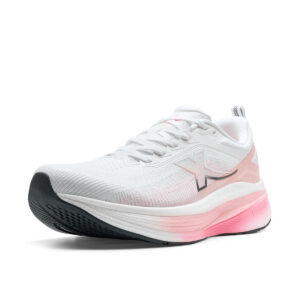
A 195 g tempo shoe with a split carbon plate. 28 mm at the heel, 8 mm drop, XTEP ACE+ and POWER foams underfoot, DURA rubber outsole. It is the shoe Xtep sells for interval days and race morning, not for easy recovery miles.
195 g with a carbon plate is no longer unusual. What is unusual is a shoe that keeps an 8 mm drop while doing it — most carbon racers drop to 6 mm or less and leave heel strikers fighting the geometry.
What it is
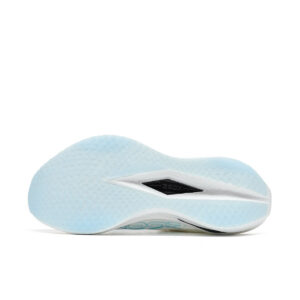
The 260X is Xtep’s tempo and race line, sitting below the 160X series. The 3.0 uses a split carbon plate rather than a full-length one, so the forefoot can still flex at toe-off. Underneath it, two foams do different jobs: ACE injected foam for bounce, POWER foam for support.
Specs
| Weight | 195 g (men’s sample size, official) |
|---|---|
| Stack height | 28 mm heel / 20 mm forefoot |
| Drop | 8 mm |
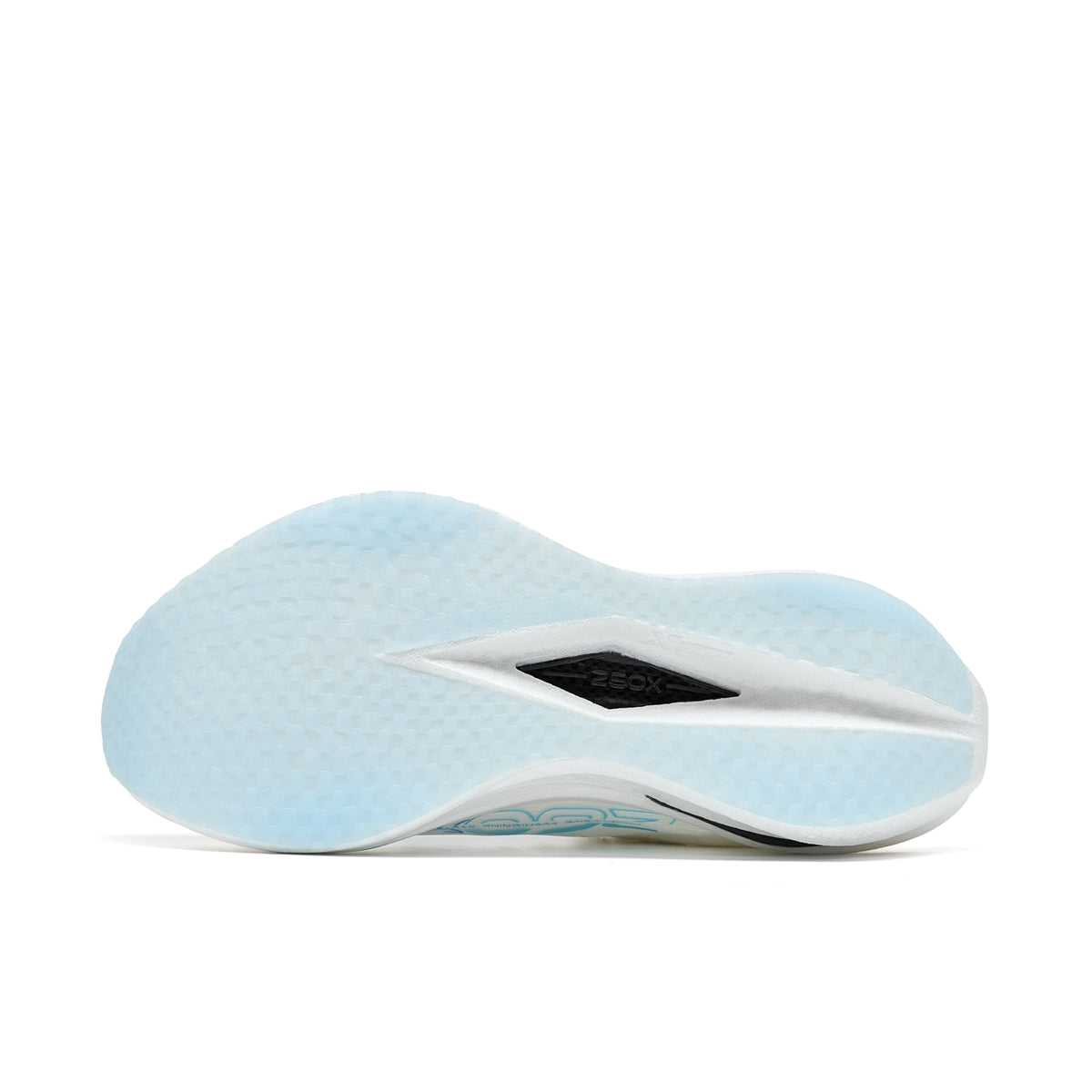
| Plate | Split carbon plate, curved outsole geometry |
| Midsole | XTEP ACE+ Tech and XTEP POWER Tech |
| Outsole | XTEP DURA Tech rubber |
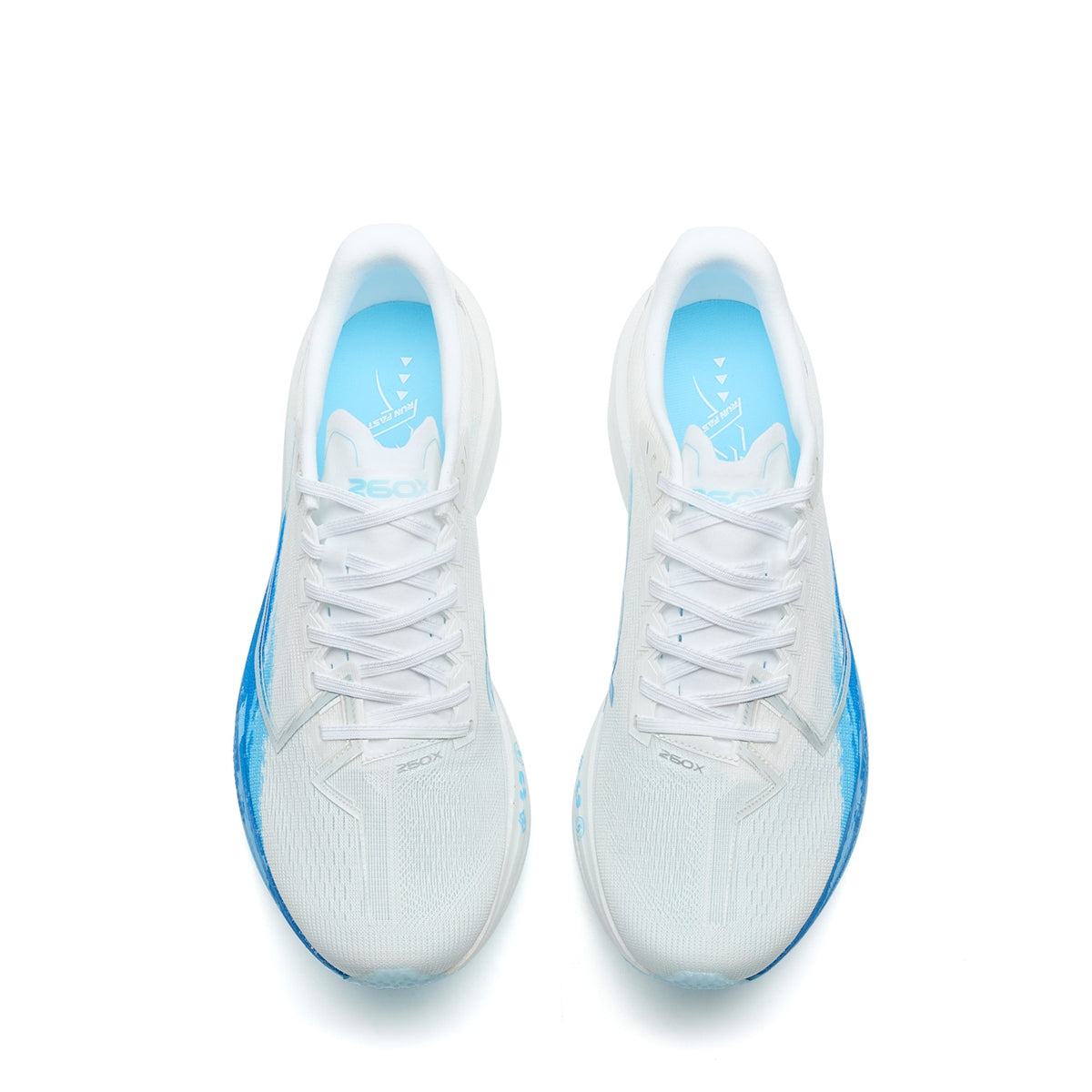
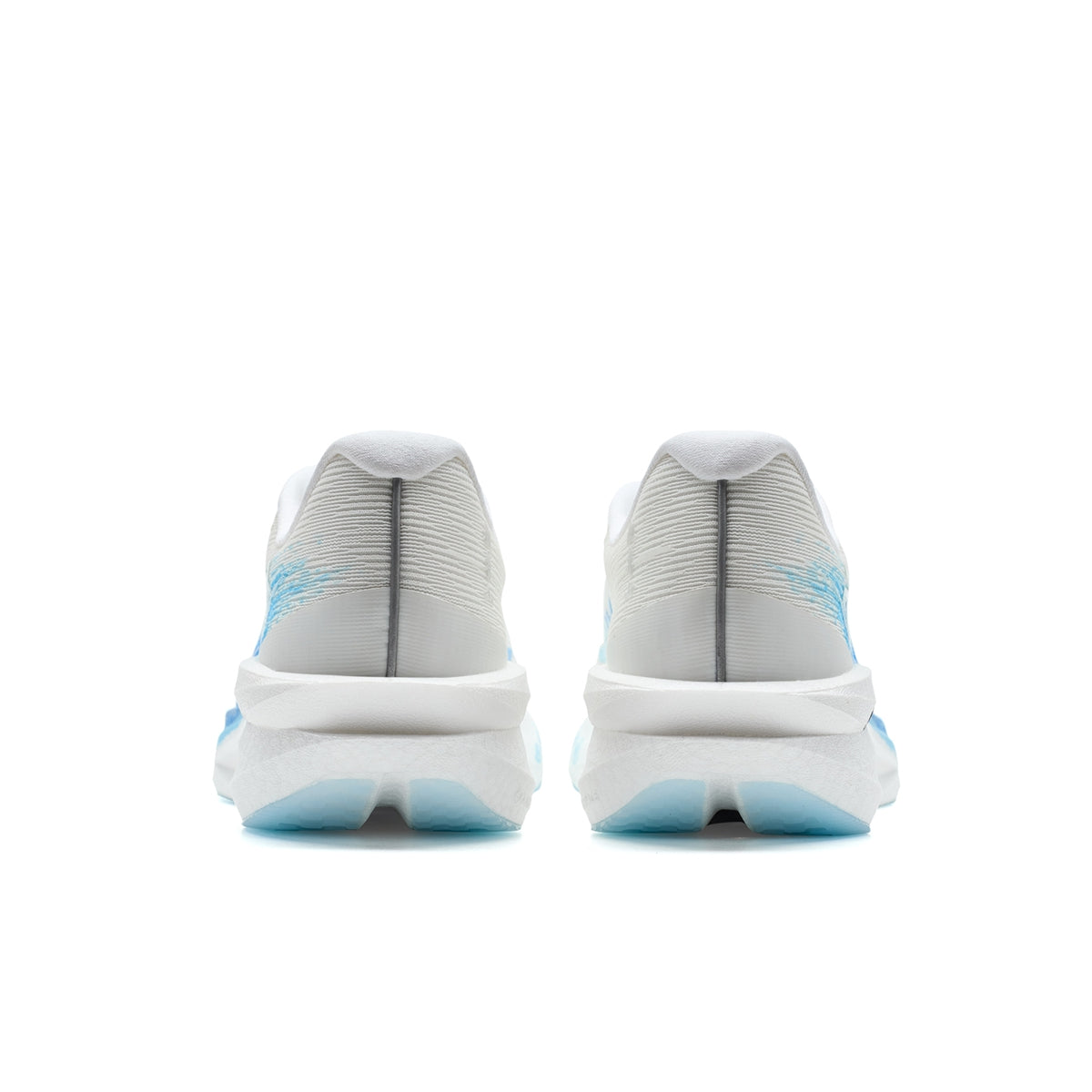
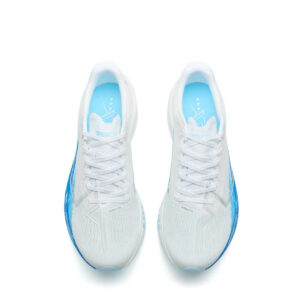
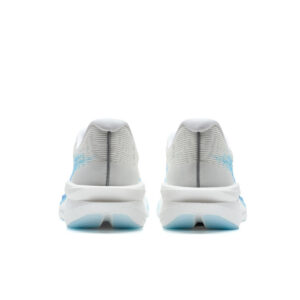
| Upper | Dual-density XTEP FIT Tech with carbon-reinforced heel |
Where it works
Interval sessions, threshold runs and race day on road. The curved outsole and the split plate roll you forward, which rewards a midfoot strike and a quick cadence. It is a bad choice for easy days — 28 mm of firm, plated foam is not forgiving at low speed — and it has no place on gravel or wet trail, where the DURA rubber is thin.
Fit and sizing
Runs true to size but narrow through the midfoot. Runners with wide feet should take a half size up; the dual-density upper does not stretch. The carbon-reinforced heel counter sits low, so it will not fight the Achilles, but it also gives less lateral hold than a taller collar.
What it costs you
Durability and comfort. A 195 g shoe with a thin rubber layer is a race-day tool; expect the outsole to wear visibly if you train in it daily. The plate also makes the ride firmer than the stack height suggests, and at slow paces the shoe feels dead rather than plush.
Buy it if you race or do structured speedwork and want a plate without a rocker that fights your stride. Skip it if you want one shoe for everything, or if you supinate hard and need more rubber under the lateral edge.
| Weight | 1 lbs |
|---|---|
| Size | US6.5/CM24/EU39/UK5.5, US7/CM24.5/EU40/UK6, US7.5/CM25/EU40.5/UK6.5, US8/CM25.5/EU41/UK7, US8.5/CM26/EU42/UK7.5, US9/CM26.5/EU42.5/UK8, US9.5/CM27/EU43/UK8.5, US10/CM27.5/EU44/UK9, US10.5/CM28/EU44.5/UK9.5, US11/CM28.5/EU45/UK10 |
Reviews
There are no reviews yet.